
Beef collagen protein is a highly valued ingredient in dairy manufacturing and in the food industry as a whole. In dairy formulations, adding beef protein not only significantly reduces the cost of the finished products, but also improves their physical structure, sensory properties and functionality. Below: the role of beef protein in dairy production, usage rates, recipes and how to introduce it into production.
Natural beef collagen protein is a specialized ingredient with multifaceted benefits. Sensible use of beef protein in dairy manufacturing improves the appearance, density, consistency and texture of products thanks to its viscosity, gelling, coagulation and foaming properties, and also increases the overall yield and quality stability of the output.
In addition, beef protein keeps emulsions stable, prevents syneresis (liquid separation) and increases viscosity. In a formulation it works as a functional structuring agent, thickener, stabilizer and cryoprotectant. The properties of beef protein are successfully used in the production of a wide range of fermented dairy products: cottage cheese, sour cream, cheeses, yogurts, ice cream, dairy mousses and jellies.
Preventing syneresis. Prevents whey separation both during production and during storage. Especially relevant for fruit yogurts.
Texture stabilization. Improves the structure and consistency of fermented dairy products such as yogurt and cottage cheese.
Protein source. Raises the total protein value of products without soy or milk protein concentrates, which matters where lecithin or lactose restrictions apply.
Better sensory profile. Smooths out graininess in curd desserts and gives low-fat products a fuller body.
Process stability. Native collagen protein withstands short-time pasteurization and retains its functionality during heat treatment.
Fiber as reinforcement. The fibrous structure acts as a framework in the product: it forms a denser and stronger gel compared with a finely dispersed powder.
Foaming properties. Give the final product its characteristic airy mouthfeel; in mousses the protein keeps the foam stable before setting.
Emulsion stabilization. Improves the stability of emulsions of various types.
Viscosity. Increases the viscosity of fermented dairy products, dairy desserts and ice cream.
Aeration and overrun. Keeps the emulsion stable, facilitates aeration (soft-serve ice cream) and improves overrun (expansion).
Cryoprotective properties. Prevents the formation of large ice crystals during long-term storage.
Collagen protein was originally a familiar item in the production of semi-finished meat products and sausages. Its technical properties, namely the high amino acid content and the ability to form gels and improve texture, make animal protein for dairy products a working tool in the dairy industry as well.
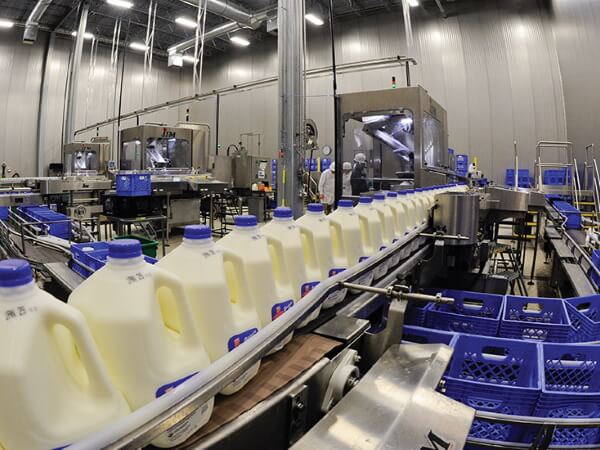
Milk and dairy products are an important source of high-quality protein in the human diet. The nutritional value of milk proteins is due both to their high content of essential amino acids and to their high bioavailability. Before consumption, milk is necessarily processed depending on the requirements for the final product and the processing technology. Such processing can cause denaturation, aggregation and chemical modification of amino acids and significantly reduce the nutritional value of milk protein.
Protein fortification of dairy products is not only a way to compensate for losses of the casein and whey fractions, but also a strong consumer trend. Natural beef protein with a native fibrous structure often serves as the ingredient for raising the protein level in dairy products and drinks while preserving texture and taste. Adding animal beef protein makes it possible to bring the protein content of dairy products up to the required level while keeping production control over the texture, taste and quality stability of the output.
Beef collagen is supplied as a fibrous or finely dispersed powder. For dairy applications the purity of the protein matters: residual fat, odor, ash content. When choosing a beef protein supplier, pay attention to:
food safety certificates (HACCP, ISO, sanitary certificates);
the level of solubility and taste neutrality, especially for low-fat yogurts and desserts;
stability at low pH and during pasteurization.
At the production stage, introduction comes down to preparing a dry mix or adding the protein to the base milk mass before homogenization and heat treatment.
In dairy manufacturing, the recommended dosage of beef collagen protein varies depending on the specific technological task and the desired effect. Beef protein is added to the formulation in dry form before the heating step.
Table 1. Usage rates of BioPro-B beef collagen protein in dairy production
| Parameter | Value |
|---|---|
| Recommended dosage | 0.2 to 2% (higher dosages are possible) |
| Standard share for fermented dairy products (yogurts, cottage cheese) | 0.5% |
| Dry matter content | 95% |
| Protein content in dry matter | not less than 90% |
| Fat content | not more than 5% |
| Product form | native fibrous powder, “medium fiber” |
| Average particle size | 250–300 µm |
| Packaging | paper bag, 8 kg net |
| Method of addition | in dry form, before the heating step |
| Raw material | high-quality Russian raw material |
The functional protein BioPro-B for dairy production can be used for partial replacement or compensation of ingredients:
Table 2. Ingredient replacement rates with BioPro-B beef protein
| Ingredient replaced | Replacement share |
|---|---|
| Dry milk proteins, caseinate, casein | 15–50% of the amount used |
| Stabilizing systems and blends based on whey proteins, dietary fibers, carrageenans, starch | 50% of the amount used |
| Dietary fibers | up to 100% of the total amount |
| Gelatin | up to 100% of the amount used |
At the recommended doses, collagen does not inhibit starter cultures. However, it is important to test the protein with your specific starters: some strains are sensitive to changes in the ionic strength and osmolarity of the medium.
Table 3. Dosage of BioPro-B beef collagen protein by type of dairy product
| Product | Dosage | Technological effect |
|---|---|---|
| Thick drinking yogurt | 0.5–2.0% by weight | Improved structure and creaminess |
| Curd dessert | 0.6–1.5% by weight | Reduced graininess, stability during storage |
| Yogurt-based mousse dessert | 0.8–1.2% by weight | Structure formation during whipping |
Pasteurized milk — 1 L
Starter culture — as per instructions
Sugar / sweetener — as per recipe
Beef collagen protein — 0.5–2.0% by weight (0.5–2.0 g per 100 g of product) — improved structure and creaminess
Curd mass — 180 g
Fruit purée — 20 g
Beef collagen protein — 0.6–1.5% by weight — reduced graininess, stability during storage
Yogurt — 300 g
Gelling base (if required) + sweetener
Beef protein for dairy production — 0.8–1.2%, added to the dry mix before whipping
Start with a pilot line. Test 3–4 concentrations and record the indicators: viscosity, whey separation and sensory properties after 1, 7 and 14 days.
Control the pH. A significant drop in acidity requires adjusting the formulation, since the gelling properties may change.
Assess the impact on protein declaration. When animal protein is added to dairy products, make sure the labeling and the declared nutritional value match the actual formulation.
Allergenicity. Beef protein is not one of the 14 major allergens in most jurisdictions. Nevertheless, the product composition should be disclosed on the label and communicated to customers.
Labeling and protein accounting. When adding animal protein to dairy products, make sure the labeling, the declared nutritional value and the supply chain are aligned with the company’s internal quality policies.
Halal markets. BioProFood’s production is Halal certified: the requirement applies not only to the finished product but to the entire production process. This removes the question of eligibility for product lines aimed at Halal markets.
Clean taste and odor. For low-fat yogurts and desserts, the taste neutrality of the protein is critical. The native collagen protein BioPro-B has a neutral taste and odor and does not distort the sensory profile of the dairy product.
One of the advanced solutions for the food industry is the beef collagen protein for dairy products BioPro-B. It is a Russian-made native beef protein, produced only from high-quality Russian raw material, containing not less than 90% protein in dry matter and supplied as a fibrous powder with a neutral odor.
Beef collagen protein is a practical and cost-effective tool for producers of yogurts, curd products and dairy desserts. It acts as a stabilizer, increases the protein value, which is especially relevant for low-fat and functional lines, and reduces the cost of finished products. Implementation requires pilot testing with your starter culture and strict supply control.
The BioProFood plant (LLC “TPP BioProFood”) has been operating since 2014 and has specialized in beef collagen protein as a single product for more than 10 years. This specialization makes it possible to maintain stable quality and continuously control product safety.
Quality control. Production operates on HACCP principles. Every batch of incoming raw material and finished protein is tested in the laboratory; quality is confirmed by VNIIPP test reports and a declaration of conformity with the Customs Union technical regulations.
Halal certification. The enterprise is Halal certified: the requirement applies not only to the finished product but to production as a whole.
Domestic raw material. Only Russian raw material is used in production: cattle hide split. Every batch undergoes incoming and veterinary inspection.
Supply geography. The plant works with milk and meat processing enterprises, partners and distributors throughout Russia.
Would you like a template for an industrial test plan, or to discuss selecting the right type of collagen for your product? Write to us: the BioProFood team will prepare a technical and commercial proposal and samples for a trial batch.
BioPro-B specifications: bpfpro.ru/en/bio-pro/ | Contacts: bpfpro.ru/en/contacts-2/
IF YOU WANT TO KNOW MORE ABOUT OUR PRODUCTS — WRITE TO US AND WE WILL DEFINITELY REPLY
 Website support
This website uses cookies to collect visit statistics. Learn more in our Personal Data Processing Policy and Personal Data Processing Consent.